Pages

Friday, 25 October 2013

New Novel Title

My novel has a new title, something that was always likely to happen as early readers invariably got mixed up and ended up calling it a variety of the following titles: We Are Together Here, Together We Are Here, Here We Are Together, We Are Here Together...

It's now called A SONG FOR ISSY BRADLEY. 

There's a lot of singing in the novel, some of the songs are hopeful, others are sad. Mormons believe that the words of hymns are like scripture. They also teach that singing a hymn is a good way of diverting bad thoughts.

There is a verse in a Mormon book of scripture known as the Doctrine and Covenants that goes pretty well with the new title.
For my soul delighteth in the song of the heart; yea, the song of the righteous is a prayer unto me, and it shall be answered with a blessing upon their heads. (Doctrine and Covenants 25:12)
I've finished all the edits (I think). The manuscript arrived back from the copy editor this morning and there's a whole new list of changes to make, mostly grammatical edits, but there are occasional corrections too (for example, it's not dark at 7 a.m in September - doh!). I've got to hurry up and make the new changes as proofs need to be ready by the middle of next month. It's a scary and exciting feeling to know that people will be reading early copies soon.

Saturday, 12 October 2013

Editing and Short Stories Aloud

I've spent this week editing the British version of my novel. Fortunately there weren't too many things to change, although we did decide to shorten the prologue, particularly the opening paragraph which has morphed from a dream sequence into a dream sentence! Yesterday I had a chance to talk to my editor about my book cover and I am HUGELY excited about her ideas for both the hardback and paperback.

I also received a list of language edits for the American edition of the book. I'm going to keep a lot of football (soccer!) terminology and some very British swear words, which was a pleasant surprise. I hadn't realised how many regional words and phrases I had included until they appeared on the list of words to replace: ginnel, piffy on a rock bun, yonks, chivvy, trumps...

In other news, I'm delighted to be appearing at Short Stories Aloud on Tuesday 22nd October at The Old Fire Station. Actors Julie Mayhew and Melissa Berry will be reading short stories by Charlotte Mendelson and myself.

I've never heard anyone read one of my stories aloud before so it's going to be a really interesting experience.

Sunday, 6 October 2013

Tea for three

I had a lovely time at the Hutchinson Proof Party. The Spiegeltent was incredible, it felt like we were inside a carousel or a small circus tent - an appropriate venue for Dea's novel which contains a travelling circus. 

It was really exciting to share a stage with Dea and Helen. I've read their novels and can't quite believe that I was allowed to sit next to them and talk about my book in front of so many people.


Here I am afterwards with Dea and Helen (and half a sandwich stuck in my right cheek). 

I had an interesting journey home. There had been a Warrington and Wigan rugby match and when I got to Manchester Piccadilly the police were segregating supporters (and anyone who happened to be inadvertently travelling with them). We were held in a long queue until after the time our train was supposed to leave. Eventually we were herded into a carriage; I've never seen so many people on a train (and I've never brushed up against so many big-bellied men). 

I ended up sitting next to a little boy with a vuvuzela, a man in front of me was bleeding and appeared to have a broken nose. We stopped at Hinckley because someone was hurt (I think they fell off the train) and the conductor needed to wait for the ambulance. Did I mention the vuvuzela? It was a memorable, if somewhat bonkers end to a lovely day. 

Here is an account of the event written by book blogger and reviewer Naomi Frisbee.

Tuesday, 1 October 2013

The Hutchinson Proof Party at the Cheltenham Literature Festival


lt03.jpg
On Saturday I'll be joining Helen Dunmore and Dea Brovig at the Cheltenham Literature Festival for the Hutchinson Proof Party. The event will preview Helen's novel The Lie and Dea's novel The Last Boat Home (I was lucky enough to receive proof copies of both books and wrote about them here). I'll be reading a short excerpt from Here We Are Together.

The event will take place in the Spiegeltent, an antique structure, originating in Belgium in the early 20th century. I've looked at some gorgeous photographs and I'm really excited to see it properly.

For more information and a list of other events, visit the Cheltenham Festivals website.

Friday, 27 September 2013

Fantabulous Stuff

I have been BURSTING to say something for almost a month...

On Weds 28th August my novel went out on submission. I expected to hear whether there had been any interest in it by mid October, but forty eight hours later I received a call from my agent: 'You'd better sit down, Carys,' she said. And then she told me that a publisher had made a pre-emptive bid for my book.

A second phone call followed - sit down, again. Another publisher had matched the first offer.

It was still the summer holidays and the children were at home. When they realised what was happening they went wild, dashing around the house, hugging each other and spending imaginary money on extraordinary Lego sets (it's a Lego cinema - how could anyone resist?).

As it was a Friday, things stopped there for the weekend, with two publishers bidding for the book. Sons 2 and 3 made a special celebration cake for tea (by themselves - clearly emboldened by our recent Come Dine With Me experience). It was lovely.


Slightly shell-shocked.

The following Monday morning, I popped to London to meet some publishers. It was utterly overwhelming and wonderful. The visit kicked off an auction involving four amazing publishers - I would have been ecstatic to be published by any of them.


While I was in London I was duty-bound to buy the correct doughnuts for everyone.


HutchinsonAt the end of an almost sleepless week, the auction finished with two of the publishers making very similar final bids. I decided to go with Hutchinson, part of Random House.

Hutchinson publish some fabulous authors.

This is how I feel inside:


firework gif   
        YIPEE!
        YIPEE!
        YIPEE!
        YIPEE!


When the auction ended I took the children to Frankie and Bennys to celebrate. They made the most of the excitement and ordered starters, fizzy drinks and anything/everything else they fancied.

A day or two later, a big bunch of flowers arrived from Hutchinson. They're still on my dining room table; the lilies have opened like stars and every time I look at them I feel like dancing.


Here is a link to today's announcement of the deal in The Bookseller.

Thursday, 26 September 2013

LiveFriday Event


Tomorrow evening (27th September) Short Stories Aloud will be at the Ashmolean Museum of Art and Archaeology as part of the LiveFriday event. Short stories by Helen Simpson and me will be read by actress Melissa Berry. I *really* wish I could be there.


Tuesday, 24 September 2013

Lovely Books


I've been a bit of a literature magnet in recent weeks and have managed to acquire several piles of fantastic books. Above is my current 'to read' pile. Next up is Jo Baker's Longbourn which has had amazing reviews and I know it's going to be gorgeous because I had a sneaky read of the first chapter a couple of weeks ago. Below are some of the books I've been reading.

I really enjoyed What Lies Within by Tom Vowler and The Summer We All Ran Away by Cassandra Parkin, fellow Scott Prize winners. What Lies Within is a suspenseful, unsettling novel. The narrative alternates between Anna and a young teacher who has been sexually assaulted by one of her students. For me, a huge part of the pleasure of reading this book came from working out how the narratives were linked (nope, I won't be giving any spoilers). The Summer We All Ran Away takes place in an abandoned house in Cornwall. When nineteen year old Davey arrives at the house drunk and beaten he is taken in by Kate, Tom, Priss and Isaac whose stories unfold as the narrative progresses. It's a thoughtful, lost and found novel that moves seamlessly between times as it examines friendship and love over several decades.

Rachel Joyce does prickly Englishness so well in The Unlikely Pilgrimage of Harold Fry. Harold leaves home one morning to post a letter and ends up walking to the other end of the country. It's a novel that could easily get boring as the reader accompanies Harold on his long walk through the British countryside, but it doesn't disappoint. While Harold walks, he comes to terms with a series of losses in his life and there are lovely descriptive passages as he becomes aware of his surroundings. The Unlikely Pilgrimage of Harold Fry is a story that's packed with eminently likeable characters and yet it's not at all saccharine or sentimental.

The Lie and The Last Boat Home are proof copies of books that haven't yet been published (I know, lucky me!). The Lie is a gorgeous novel set in the aftermath of the First World War. A young man returns home to Cornwall, suffering from what we would probably now call PTSD. Night terrors and panic attacks impair his judgement leading him to tell a lie that has disastrous consequences. The narrative moves between post-war Cornwall and the trenches. Dunmore's descriptions of trench warfare are horrifying and reminded me of Pat Barker's excellent war novels. Dea Brovig's The Last Boat Home is also a novel about a lie. Set in an icy landscape, it moves between 1974 and the present as Else's first love returns to town and she is forced to re-examine the past. Else's story unfurls delicately, gradually and skilfully, ensuring that the secret at the heart of the novel is revealed at precisely the right moment.  

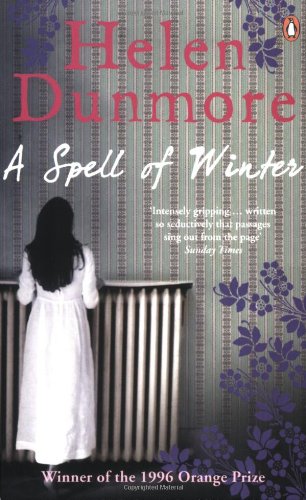
A Spell of Winter is a haunting, dark novel about forbidden passions and thwarted love. Abandoned by their parents, Catherine and Rob are brought up by servants in their grandfather's house. Their mother's disappearance is mysterious and memories of their father are tinged by sadness. As they grow up their love becomes incestuous. It's another icy, wintry read and absolutely my kind of book - sometimes the writing was so beautiful and vivid I had to stop to reread sentences (I LOVE it when this happens).

I wasn't surprised when I discovered that A Spell of Winter won the 1996 Orange Prize.
This final pile of books is research for novel no.2. I'm trying to adopt the novel-planning method that Ed Docx recommended at Arvon, but I'm finding it hard not to plunge in at the deep end. So far, I have managed to resist. And my long-suffering husband has managed not to point out the irony of ordering even more books in order to learn about bibliomania. Result!

Friday, 20 September 2013

Writers' Forum

Here's a small piece about Sweet Home and winning writing competitions in Writers' Forum Magazine.

There are a couple of mistakes (including the book title and the surname of one of the authors who kindly wrote a cover quote) but hey, you can't have everything, right?


Sunday, 15 September 2013

At Books Are My Bag


I had a lovely time on Saturday afternoon during the Books Are my Bag event at Formby Books.

I read the title story from Sweet Home and stayed for a while to chat to some of the bookshop customers about publishing, novels, and erotic fiction - theirs, not mine! One man had even made special cakes, how good is that?!

Monday, 9 September 2013

Guest Post: Poet and Short Story Writer, Alison Lock

Poet and writer Alison Lock's short story collection Above the Parapet was published in April 2013 by Indigo Dreams Publishing. Her stories have been described as 'soulful, unsettling and beautifully written.' Below, she discusses the interesting relationship between poetry and short stories and her writing influences.

Questions of Influence and Origin from Above the Parapet by Alison Lock.

Before I draw up a list of influences I must describe to you how I work. I began by writing poetry and poetry for me comes from a thought that triggers a reaction somewhere in the area of my heart. It is never a process whereby I sit down and work through an idea or set off along a line of research (that comes later with subsequent drafts and when I need to confirm the facts). Neither do I look for a story that will fit into a traditional plot structure.  What I do know is that there is a point quite early on when I know if I am writing a poem or a story. I suppose, for me, a story is an elongated poem, at least in its process if not its outcome. Each story is a journey with words that feel their way along the lines of the page wanting to go further, often it is on the border of prose and poetry, sitting uncomfortably at the edge of a genre, nudging its way into another. I suppose I can only describe it as an instinctual process.

Often the stories originate from events that have happened during my lifetime, for instance; the eruption of the Eyjafjallajokull volcano in Iceland in 2011 triggered the story Ashes for Roses. Not all the stories are set in the past; on the contrary, some are in the present and even the future. Neither are they necessarily written in the first person; they might be in the third or even the second person, the latter being a good way of turning reader into protagonist. Sometimes a story is based on a single incident or a social or political situation that is nagging at my consciousness, for instance: climate change, female emancipation, euthanasia, corporate society, loss of the aesthetic in the modern world, but also it might just as easily come from a childhood memory.

Some of the stories in 'Above the Parapet' have been described as quite dark in their subject matter. I decided early on that I would not baulk from reaching into the darkest recesses albeit with Kafkaesque results. Death is a universal human inevitability and our state of impermanence is often ignored, but, like the Grim Reaper of medieval times, it will always be there in the wings. In ' The Hanging Tree' I question how it would feel to regret one's life's work however much job satisfaction has been attained in its execution (no pun intended). We rarely have the opportunity to assess our roles in society until the time comes when we are separated from them.  This story finds a world without redemption, but you'll glad to hear that most of the stories hold the promise of a new or at least another life beyond.

A prevalent theme is about a closeness to the natural world; whether literal, emotional or spiritual. 'The Colour of Glass', set in a futuristic world, is the home to the last survivor of the old world.  Nan is old in years and some in the community feel that her 'hobby' of glass making has been indulged for long enough. The threat of euthanasia lingers over Nan as the Board meet to decide her fate. Will anyone understand the need for objects that are beautiful, that transcend the everyday?

As for my influences from the literary world, it is difficult to know as there are so many that I admire so I have picked a few that I have read recently or have had an impact on me:

Raymond Carver. Where I'm calling from.Selected Stories.
Angela Carter. The Bloody Chamber and Other Stories
Italo Calvina. If on a Winters Night a Traveller
Short stories from Tania Hershman, Zoe Lambert, Sarah Hall
and a recent discovery: Ursula le Guin

Why do I write short stories? I like to explore different ways of seeing the world and the short story is a neat conveyor of thoughts and ideas where a writer can hope to leave traces of words that will trigger thoughts or ideas in the reader. As for 'Above the Parapet', the reader may 'get' the stories or they may not, but I am willing to take the risk, because without risk we cannot be true to ourselves.


The Colour of Glass (excerpts)

'She blows and wields the molten glass, twirling the glowing poker, holding it up and beating it down onto the marble slab, bending the treacle, forming spouts, lips, handles, loops. She nips and tweezes until she is content with her vision of transparency. Every shelf is full, three deep with lamps and goblets and jugs and bottles and even a bowl of glass eye balls. Her work is her life but her life began in another world. The items she makes no longer have a practical use. Now, there are synthesised materials, so easily produced and cheaply too. They can be moulded into any form that is required.

There are some who still enjoy the beauty of glass objects but they do not speak of it. There is nothing to be gained from indulging in visual satisfaction, they are told, it is an outdated concept from an old world when people believed in something called the imagination, an intangible thing that cannot be proved, and therefore, does not exist. Such beliefs are dangerous in this new world and Nan has been indulged for long enough.

...Third generation Orbisher, Jonti P, is seated at the boardroom table where the shiny surface reflects the piles of legal papers, the evidence for the case. The light from the window has draped a pearly sheen over the room and the deep shadows accentuate the features of those present. Jonti’s elbows are propped on the table and he chews his tongue as he twirls a lock of blond hair. Morality and mortality do not interest him. He would prefer to be at his work in the lab amongst the test tubes and Petri dishes than to sit around a table discussing human resource levels. At least experiments are methodical, they have specific aims, they have hypotheses that can be verified, falsified, validated. Here, there are no absolutes, no obvious conclusions.


Alison Lock www.alisonlock.com