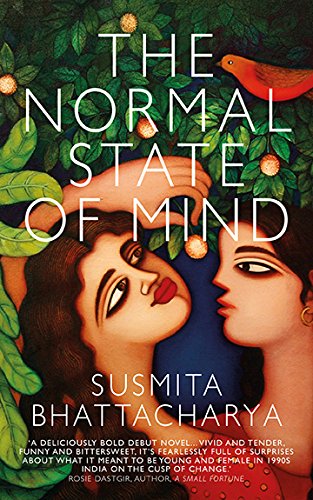
Can
you tell me a little bit about your writing journey?
I remember always writing
something, even as a child. Poems, stories especially fan fiction (didn’t know
the term then) of Enid Blyton’s Famous Five and I loved illustrating them as
well. I moved on to keeping journals as a teenager, and explored writing short
stories. I won my school’s annual essay writing competitions a couple of times,
but I never regarded being a writer as a possibility. I mean, when I was
growing up, one didn’t have social media, lit fests or much interaction with
writers. Mostly, the writers were English and dead, eg Austen, Dickens,
Shakespeare. The Indian writers like R.K. Narayan and Ruskin Bond were
established and favourite writers but I couldn’t imagine being like them. Writers
were revered and belonged in another strata which did not include middle-class
school girls with a flair for writing. So writing was consigned for my personal
pleasure and I went to art college to become a graphic designer.
I started taking writing
seriously when we moved to Cardiff. My husband was doing a PhD at Cardiff
University and I got hold of their Lifelong Learning brochure. I was so
surprised to see Creative Writing classes listed there. My first reaction was,
do people need classes to learn to write? That was silly of me to think that
way, because when I went to art college, quite a few people would comment, you
need to go to college to learn to paint? My child is a born artist! (Or
something on those lines).
But I enrolled in an
evening class, and it was the best thing I ever did. I found my writing voice
and the passion to write. My tutor, Bella Kemble was fantastic. She encouraged
me and advised me to think about doing an MA in Creative Writing at Cardiff
University. So I did. Creative Writing courses don’t teach people to write,
just like Art College. It helps to enhance your writing skills, introduces you
to reading a vast array of literature and academic work, eases you into
workshops and criticism of your work and puts you in touch with fellow writers
and tutors. A fantastic experience I have never regretted.
 It was really interesting
to read about modern urban Indian women. Do you think they are
under-represented in literature? Is that why you chose to set you novel in
India rather than in say, Plymouth?
It was really interesting
to read about modern urban Indian women. Do you think they are
under-represented in literature? Is that why you chose to set you novel in
India rather than in say, Plymouth?
I do think Indian urban
women living in India are under-represented in literature. There is a lot of
literature about the modern Indian immigrant or women-centric stories set in
historical times in India. Manju Kapur is an author I admire who writes about
the modern Indian woman and their issues, mostly set in India.
I’ll tell you a funny
story about my experience at the writing class. We had to describe a scene from
a picture postcard and write a 500 word story based on it. I wrote a very
moving story about a man who was tired of life, and decided to stop driving on
the motorway and lie down in a field of daffodils... in November. While I was
reading aloud about him contemplating life among the flowers, I noticed people
trying to be polite and not laugh. Please note, that in India, the seasonal flowers
bloom in the winter months. I juxtaposed the settings without thinking much of
it, and made such a blunder. And my tutor gave me the best advice ever: Write
what you know about. I have taken that very seriously.
I started this novel as a
dissertation for my MA. I decided to write about the modern Indian woman
because that was me. I wanted to write about issues I faced, or saw happening
in front of me. I had first-hand experience of growing up in India amidst the
riots, the terror attacks. I also had the experience of having close
friendships with strong, independent women and we lived our lives with a lot of
freedom to live as we chose to. I wanted to write about all of that.
I lived in Cardiff nearly
five years, but I was never confident to write about it. I always set my
stories in India. But when I moved to Plymouth, I found myself setting my
stories in Cardiff. I live in Plymouth now. Perhaps I’ll have to move before I
can write about it. I read an essay by Salman Rushdie, where he says:
‘…exiles
or emigrants or expatriates, are haunted by some sense of loss, some urge to
reclaim, to look back, even at the risk of being mutated into pillars of salt.
But if we do look back, we must do so in the knowledge – which gives rise to
profound uncertainties – that our physical alienation from India almost
inevitably means that we will not be capable of reclaiming precisely the thing
that was lost; that we will, in short, create fictions, not actual cities or
villages, but invisible ones, imaginary homelands, Indias of the mind.’ (Rushdie, 1983)
Maybe that’s the thing.
One needs to look at a place from a distance to be able to fictionalise it. Not
in all cases. But that’s how it was with me.
Moushumi talks about
behaving ‘immorally’. Is Moushumi's discomfort based on a religious or a
cultural belief about homosexuality? Jasmine talks about how much better things
are for gay people in the west - what is it like for gay people in India?
I think it is more of a
cultural belief. The laws against homosexuality were enforced during the
British rule in the 19th century as they were ‘against the order of
nature’. There is evidence in the temple carvings of ancient India that
homosexuality was not looked down upon or marginalised. It was celebrated in
various forms, as evident in the art, sculpture and literature of India. In
2009, the Delhi High Court, overturned this 150 year old section and
consequently legalised consensual homosexual activities among adults. There was
a huge celebration that at last, there was progressive thinking and the LGBT
community was being accepted into society. But in December 2013, all that
changed and the Supreme Court of India ruled homosexuality as a criminal
offence under Section 377 of the Indian Penal Code. Yes, religious figures
claimed publicly that being gay was a disease that could be cured through yoga
and other means. There were massive protests and eminent people from film stars
to economist Amartya Sen and writer, Vikram Seth expressed their disappointment
and anger against the ruling, but this law stands firm to date.
People don’t come out for
various reasons, besides the Section 377: family won’t accept them, they’d be
at risk of losing their jobs, be victimised in homophobic attacks etc.
Ignorance is another factor. Homosexuality is often believed to be a disease
and people are often taken to ‘doctors’ to be ‘cured’. A common belief is that marriage will cure
it, and many are forced into marriage that ruins the lives of couples involved
and their families. There are very few couples, especially women, who can live
openly together. A lot of times, a gay person may take on a lover outside of
the marriage and try to live a double life. Gay women often discover their
sexuality after marriage, and want to explore their new selves, but rarely have
there been divorces where the woman leaves the husband to live with her lover.
 Dipali
and Sunil have an arranged marriage. It's a happy marriage, how do you feel
about arranged marriages?
Dipali
and Sunil have an arranged marriage. It's a happy marriage, how do you feel
about arranged marriages?
I don’t have a problem
with arranged marriage, they have been successful for generations. That was
mostly the norm in my parent’s generation and before that. In India, the family
structure includes the grandparents, uncles, aunts, cousins etc etc. In the
past, and in many cases now as well, most people lived in joint family systems
–the brothers with their families, and the parents all lived under one roof. So
it was very important that the woman who married into the family was of the
same caste, social status, religion to fit into the family without causing
disruption. It helped continuity in the lineage. This could only be done with
the family arranging the marriages of their sons and daughters with other
suitable families. It would be/is done to unite two businesses as well.
There was also a question
of dowry. When a woman married, her family paid the groom’s family what they
demanded: a car, cash, jewellery, household items, perhaps paying for the
groom’s further education abroad. This could happen only when the marriage is
arranged, for if the couple fall in love and want to marry, such demands could
be difficult to ask for. Though dowry is a criminal offence, most of the people
involved go under the radar unless the girl or her family protest and lodge a
legal complaint against the perpetrators.
Things started to change in
the past when the women could leave the boundaries of the house, get an
education and have careers of their own. They could meet single men and fall in
love. If they were lucky they got married. Things have changed now. Young
people today tend to find their own partners, especially in urban India. But
caste, religion and social status are criteria that cannot often be overlooked
even today, because in Indian culture, you do not marry a person, you marry the
entire family.
Most of my friends have
had love marriages, including myself. Some had to fight for their right to be
together, for some it wasn’t a problem at all. Some have had arranged
marriages, and they have successful marriages as well. Sometimes both arranged and love marriages
fail. It is all very individual. You can think of arranged marriages as what a dating
website is in the west. You add in your profile, tick the boxes and it matches
you to a suitable person! Only here, the matchmaker could be your parents,
uncles, aunts, grandparents, sister-in-law...
Do
you see The Normal State of Mind as a feminist novel?
I get asked this question
a lot. But I don’t want to put myself or the book into a single category. But
I’ve just googled the definition of feminist writing and it says ‘Feminist literature is fiction or
nonfiction which supports the feminist goals of defining, establishing and
defending equal civil, political, economic and social rights for women.’
So yes, it would be feminist
writing, but I’d like people to read it as a story and choose what they’d like
to take away from it and how they’d like to categorise it.
Vijayalakshmi Pandit, the
first woman politician to hold a cabinet post and diplomat, whose brother
happened to be the first prime minister of India, mentioned in a piece in the
Ananda Bazaar Patrika (1938): ‘People
tell me the modern woman is aggressive. I wonder if this is true. But if it is,
she has good reason for it, and her aggression is only the natural outcome of
generations of suppression. The first taste of liberty is intoxicating, and for
the first time in human history, a woman is experiencing the delights of this
intoxication...’
When I read this, I
thought how true. She wrote this in 1938, we are in 2015 now, and still, the
modern woman is fighting... fighting for her rights, fighting for her equal
place in society. I realised that be it lesbian or a widow, as Dipali, mentions
in the book, women are still identified in relation to a man, or to the lack of
one.
It is important to get
the struggles women face to own their identity out there in the open. I thought
it was always an issue in India, but now when I look at the world, specifically
the West, it isn’t much different. Women are still struggling against the
‘laws’ written down by the patriarchal society. That is why Patricia Arquette
included the fight to equal pay for women in her acceptance speech at the
Academy Awards. That is why millions of Indians gathered to protest against
rape and murder of women following Jyoti Singh’s mutilation and rape,
consequently death in 2012.
I believe I have much to
share about these inequalities and issues that women go through, and hope that
my daughters won’t have to go through it in their lives. I hate ‘pinkification’
of girls and all things to do with females, be it Barbie or breast cancer. So
yes, you could say I wanted to write about women’s issues. I will not burn my
bra or be against men, as you will see in the book, the men are not all bad!
But I want to write about women, fairly and honestly, and talk about issues
they face in this world.
What
does your family think about the novel?
I haven’t let anyone
except my husband read it as far as family goes. And a couple of trusted writer friends. They
gave me very relevant and good advice and criticism. I know the LGBT factor raised
eyebrows, created interest and curiosity whenever I answered the inevitable
question: So what’s your book about? But I never had any negative response.
My family and friends
have been very supportive of the book and its subject matter.
What
are you working on now?
I have a collection of
short stories that I think I am ready to send out to publishers. The short
stories deal with the theme of loss in many ways. A man in a city far away from
his homeland, writes letters to his pregnant wife, promising her the good life
in the west. A woman, whose parrot suddenly takes on the voice of her dead
husband; a woman who joins her husband to a fancy business dinner but craving
her simple home cooked meal at home; a couple who mourn their stillborn in very
different ways.
I’m working on another novel but it’s too
early to comment on it now.
Thank you for answering the questions in such detail, and the very best of luck with The Normal State of Mind.
You can read more about Susmita in this lovely piece in the Plymouth Herald.